Science, Technology & Health: November 2014 Archives
Conservative Party London Mayor Boris Johnson comes to the defense of Philae mission astrophysicist Matt Taylor and his sartorial whimsy. Here's a picture of the supposedly offensive shirt:
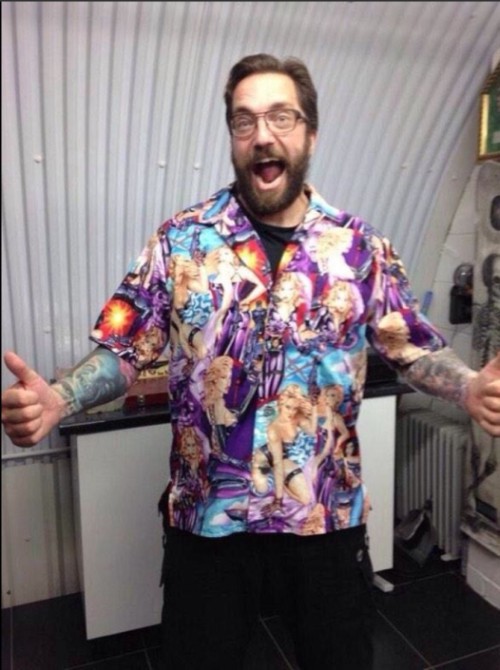
Says Mayor Johnson:
This mission is a colossal achievement. Millions of us have been watching Philae's heart-stopping journey. Everyone in this country should be proud of Dr Taylor and his colleagues, and he has every right to let his feelings show.Except, of course, that he wasn't crying with relief. He wasn't weeping with sheer excitement at this interstellar rendezvous. I am afraid he was crying because he felt he had sinned. He was overcome with guilt and shame for wearing what some people decided was an "inappropriate" shirt on television. "I have made a big mistake," he said brokenly. "I have offended people and I am sorry about this."
I watched that clip of Dr Taylor's apology - at the moment of his supreme professional triumph - and I felt the red mist come down. It was like something from the show trials of Stalin, or from the sobbing testimony of the enemies of Kim Il-sung, before they were taken away and shot. It was like a scene from Mao's cultural revolution when weeping intellectuals were forced to confess their crimes against the people.
Why was he forced into this humiliation? Because he was subjected to an unrelenting tweetstorm of abuse. He was bombarded across the internet with a hurtling dustcloud of hate, orchestrated by lobby groups and politically correct media organisations.
And so I want, naturally, to defend this blameless man. And as for all those who have monstered him and convicted him in the kangaroo court of the web - they should all be ashamed of themselves.
Let's celebrate the brilliance of Dr. Taylor and the rest of the Philae team and reserve our faux outrage for really offensive shirts.


Congratulations to the European Space Agency for a fantastic accomplishment! The probe Philae has landed softly on its target comet.
To avoid sickness we're all taught to wash our hands, cover our mouths when we cough or sneeze, and avoid touching our face. However, for most of my life I viewed the prospect of getting sick as a binary state: either I caught something or I didn't. As I got older I considered that I might get less sick if I reduce my exposure to infected fluids, even if I couldn't avoid getting sick entirely. I read about attenuated vaccines that contained live viruses but didn't make their recipients sick (usually). As I investigated further, I finally came across a description of viral load and the puzzle pieces fell into place. Why hadn't anyone told me about this concept as a kid? Maybe most people don't know that infections aren't binary! So what is viral load?
Viral load, also known as viral burden, viral titre or viral titer, is a measure of the severity of an active viral infection, and can be calculated by estimating the live amount of virus in an involved body fluid.
Basically, it's how many copies of a virus you've got in your body: your infection (and immune response) is worse if you've got more of the virus. Your kid gives you a lot of virus copies when she sneezes into your open eyes, and you're likely to get sick more severely and more quickly. This is significant especially as a parent because it's impossible to avoid contamination from a sick kid completely, but you can reduce the severity of your eventual sickness if you work to minimize your viral load.
Viral load is also an important factor when it comes to Ebola infections:
The relatively swift recoveries of Vinson and Pham might also be attributed to their personal protective equipment (PPE) they were wearing when they treated Duncan.While some nurses at the Texas hospital reportedly complained about PPE that left their necks exposed, at least Vinson was suited up.
"She was wearing personal protective equipment during the care of her patient in Dallas, and therefore it is quite likely that the amount of virus she was exposed to was substantially less than what we see in patients who get infected in less developed countries," Ribner said.
"And we also know that the higher the viral load that you get infected with, the more severe your disease is likely to be."
"Infection" is a continuum. Even when you can't avoid exposure entirely, you can minimize the severity of your illness by minimizing your viral load.
